HOME

    Social Items

Showing posts with label Abdominal exercise. Show all posts

Last Updated: September 2026 | Reading Time: 12 minutes | Expert Reviewed

Quick Answer: Intermittent fasting (IF) is an eating pattern that cycles between periods of fasting and eating. The most popular method is 16/8 (16 hours fasting, 8 hours eating), which can help you lose weight and preserve muscle mass when paired with a balanced diet.

If you've been struggling with stubborn belly fat, low energy, or confusing diet advice, you're not alone. Intermittent fasting has grown into one of the most widely discussed eating strategies worldwide, and a major review published in the New England Journal of Medicine outlined a wide range of potential health benefits backed by decades of animal and human research.

But here's the problem: most "guides" online are either too simplistic or filled with outdated or exaggerated claims. This article is different. We've combined peer-reviewed research and real-world practicality to give you an honest, actionable guide — including where the science is strong, and where it's still debated.

Complete guide to intermittent fasting for beginners - lose fat and build muscle with 16/8 method

What Is Intermittent Fasting? (The Science Explained Simply)

Intermittent fasting isn't a diet—it's an eating pattern. Instead of focusing on what you eat, IF focuses on when you eat.

Here's what happens in your body during a fast:

  • 0-4 hours: Your body digests and absorbs nutrients from your last meal.
  • 4-12 hours: Blood sugar and insulin levels begin to drop.
  • 12-18 hours: Your body increasingly shifts toward burning stored fat for energy.
  • 18-24 hours: Autophagy activity increases—your cells begin a "cleanup" process.
  • 24+ hours: Human growth hormone (HGH) levels can rise substantially in some studies.
💡 Key Fact: Multiple clinical studies link intermittent fasting to improved insulin sensitivity, though the size of the benefit varies by individual, fasting method, and how it's combined with diet quality.

The 5 Most Popular Intermittent Fasting Methods (Ranked by Difficulty)

1. The 16/8 Method (Leangains Protocol) - BEST FOR BEGINNERS

How it works: Fast for 16 hours, eat during an 8-hour window (e.g., 12 PM - 8 PM)
Best for: Beginners, muscle building, sustainable weight loss
Difficulty: ⭐ (Easy to moderate)

2. The 5:2 Diet (Modified Fasting)

How it works: Eat normally 5 days, restrict to 500-600 calories on 2 non-consecutive days.
Best for: People who prefer flexibility.
Difficulty: ⭐⭐⭐ (Moderate)

3. Eat-Stop-Eat (24-Hour Fast)

How it works: Fast for a full 24 hours once or twice per week.
Best for: Advanced practitioners.
Difficulty: ⭐⭐⭐⭐ (Challenging)

4. Alternate-Day Fasting

How it works: Alternate between fasting days and eating days.
Best for: Significant weight loss goals, under guidance.
Difficulty: ⭐⭐⭐⭐⭐ (Very challenging)

5. OMAD (One Meal A Day)

How it works: Eat all your calories in a single 1-hour window.
Best for: Advanced users only.
Difficulty: ⭐⭐⭐⭐⭐ (Very challenging)

📊 Intermittent Fasting Methods Comparison Table

Method Fasting Window Eating Window Best For Difficulty
16/8 16 hours 8 hours Beginners Easy
5:2 2 days/week 5 days normal Flexibility Moderate
Eat-Stop-Eat 24 hours Normal eating Advanced Hard
OMAD 23 hours 1 hour Experts Very Hard

How to Start Intermittent Fasting: A Step-by-Step Guide

Step 1: Choose Your Method (Start with 16/8)

If you're new to fasting, the 16/8 method is your best starting point. It's sustainable, flexible, and fits easily into most lifestyles.

Step 2: Pick Your Eating Window

  • 12 PM - 8 PM: Most popular (skip breakfast, eat lunch and dinner).
  • 10 AM - 6 PM: Early eater (eat breakfast and lunch, skip dinner).
  • 2 PM - 10 PM: Night owl (late lunch and dinner).

Step 3: Stay Hydrated During Your Fast

  • ✅ Water (plain or sparkling)
  • ✅ Black coffee (no sugar, no milk)
  • ✅ Green tea or herbal tea (unsweetened)
  • ❌ NO calories (this breaks your fast)

Step 4: Break Your Fast Gently

Don't binge when your eating window opens. Start with:

  • A small protein-rich meal (eggs, chicken, Greek yogurt).
  • Healthy fats (avocado, nuts, olive oil).
  • Complex carbs (brown rice, sweet potatoes, quinoa).
🎯 Want to know your exact daily calorie needs for this plan?

Intermittent Fasting Meal Plan: What to Eat (and Avoid)

✅ Foods to Eat During Your Eating Window

  • High-Quality Proteins: Chicken breast, turkey, lean beef, fish, eggs, Greek yogurt, tofu.
  • Healthy Fats: Avocados, olive oil, coconut oil, nuts (almonds, walnuts), seeds (chia, flax).
  • Complex Carbohydrates: Brown rice, quinoa, oats, sweet potatoes, whole grain bread, legumes.
  • Fruits and Vegetables: Leafy greens, broccoli, berries, apples, citrus.

❌ Foods to Avoid

  • Sugary drinks (soda, fruit juice, energy drinks).
  • Processed foods (chips, cookies, candy).
  • Refined carbs (white bread, pastries).
  • Fried foods and excessive alcohol.

Intermittent Fasting Benefits: What Science Actually Says

  • Weight Loss: Multiple studies link intermittent fasting to meaningful weight loss over several weeks, with a notable share coming from visceral (belly) fat — especially when combined with a modest calorie deficit.
  • Insulin Sensitivity: Several trials report improved insulin sensitivity with fasting, which may help lower long-term diabetes risk, though results vary between studies.
  • Heart Health: Some research links fasting to improvements in blood pressure, cholesterol, and inflammatory markers.
  • Cellular Repair (Autophagy): Fasting periods appear to activate autophagy, a cellular "cleanup" process studied for its potential role in healthy aging.
⚖️ A Balanced Look at the Evidence: A large 2025 review of 99 clinical trials published in The BMJ found that daily time-restricted eating (like 16/8) did not clearly outperform simply maintaining a consistent calorie deficit. In other words, 16/8 isn't magic — its real advantage for many people is that the schedule is easier to stick to than traditional calorie counting, which matters a lot for long-term success.

⚠️ Side Effects and How to Avoid Them

  • Hunger and cravings: Normal during the first 1-2 weeks. Drink water or black coffee.
  • Headaches: Often caused by dehydration. Add a pinch of salt to your water.
  • Fatigue: Ensure you're eating enough calories during your eating window.
  • Digestive issues: Increase fiber and water intake.

Note: Consult your doctor before starting if you are pregnant, have a history of eating disorders, are underweight, or have type 1 diabetes.

Frequently Asked Questions (FAQ)

How long does it take to see results?

Most people notice initial changes (reduced bloating, increased energy) within 1-2 weeks. Visible fat loss typically appears after 3-4 weeks. Significant body composition changes take 8-12 weeks.

Can I drink coffee during my fast?

Yes! Black coffee (without sugar, milk, or cream) is perfectly fine. It can suppress appetite and boost metabolism. Limit to 3-4 cups per day.

Will intermittent fasting cause muscle loss?

Research generally suggests IF can preserve muscle mass reasonably well compared to traditional calorie restriction, especially when combined with resistance training and adequate protein intake (0.8-1g per pound of body weight).

Is intermittent fasting safe for women?

Generally yes, but women may need to start more gradually (14/10 instead of 16/8) due to hormonal differences. Listen to your body and adjust accordingly.

The Bottom Line: Should You Try It?

Intermittent fasting is a practical, well-studied strategy that can help many people manage their weight and build better eating habits. It's not a magic bullet — the latest large-scale evidence suggests it works mainly by making calorie control easier to stick to, not through some unique metabolic advantage — but for people who struggle with traditional dieting, that alone can be a game-changer.

Our recommendation: Start with the 16/8 method, be consistent for at least 4 weeks, use our free calorie calculator above, and combine IF with resistance training for the best body composition results.

Intermittent Fasting for Beginners: The Complete 2026 Guide to Lose Fat and Build Muscle

How to Do a Pull-Up: The Complete 2026 Technique Guide (From Zero to Your First Rep)

Last Updated: September 2026 | Reading Time: 9 minutes

How to do a pull-up - complete technique guide

Quick Answer: A pull-up is a compound bodyweight exercise where you hang from a bar with an overhand grip and pull your chin above it. It builds your back, biceps, shoulders, and core all at once. Most beginners need 4-8 weeks of targeted practice to get their first strict rep — this guide shows you exactly how.

Why the Pull-Up Is One of the Best Exercises You Can Do

The pull-up is a true test of relative strength — how much of your own bodyweight you can move. Unlike machines that isolate one muscle, a pull-up recruits your lats, biceps, rear delts, forearms, and core in a single coordinated movement. It needs zero equipment beyond a bar, which makes it one of the most accessible exercises in existence.

💡 Key Fact: Only around 1 in 5 adults can perform a single strict pull-up on their first attempt without training. If you can't do one yet, you're in good company — and this is completely fixable with the right progression.

Muscles Worked During a Pull-Up

Muscle Group Role
Latissimus Dorsi Primary mover — pulls your body upward
Biceps & Forearms Elbow flexion and grip endurance
Rear Deltoids Shoulder stabilization
Core (abs + obliques) Prevents your legs from swinging

Perfect Pull-Up Technique: Step-by-Step

Step 1: The Dead Hang

Grip the bar slightly wider than shoulder-width, palms facing away from you. Hang with fully extended arms and relaxed shoulders. This is your starting and ending position for every rep.

Step 2: Engage Your Shoulder Blades

Before pulling, pull your shoulder blades down and back ("packing" the shoulders). This protects your shoulder joint and creates a stronger base of pull.

Step 3: Pull With Your Elbows, Not Your Hands

Drive your elbows down toward your hips rather than thinking about pulling with your hands. This cue automatically activates your lats instead of over-relying on your biceps.

Step 4: Chin Over the Bar

Continue pulling until your chin clears the bar. Avoid jerking your head forward to "cheat" the range of motion — keep your torso upright throughout.

Step 5: Controlled Descent

Lower yourself slowly to a full dead hang. The eccentric (lowering) portion is where a large part of your strength gains actually happen — don't just drop.

Can't Do a Pull-Up Yet? Follow This Progression

Level Exercise Goal Before Progressing
1 Dead hang Hold 30-45 seconds
2 Negative pull-ups (jump to top, lower slowly) 5 reps of 5-second descent
3 Band-assisted pull-ups 3 sets of 8 reps with light band
4 Inverted rows 3 sets of 12 reps
5 Strict pull-up attempts 1 clean rep

5 Common Pull-Up Mistakes (and How to Fix Them)

Swinging or kipping: Using momentum instead of strength. Fix: slow down and control the dead hang before each rep.
Partial range of motion: Not reaching a full hang or full chin-over-bar. Fix: film yourself from the side to check your range.
Shrugging shoulders up to your ears: Loses tension and risks injury. Fix: "pack" your shoulders down before pulling.
Training pull-ups every day: Your back needs recovery time. Fix: train pull-ups 2-3 times per week, not daily.
Ignoring grip strength: Weak forearms fail before your back does. Fix: add dead hangs and farmer's carries to your routine.

Pull-Up Variations to Keep Progressing

Wide-grip pull-up: Places more emphasis on the outer lats
Chin-up (underhand grip): Shifts more work to the biceps — often easier for beginners
Neutral-grip pull-up: Easier on the shoulders and wrists
Weighted pull-up: Add a dip belt once you can do 8-10 clean bodyweight reps
Archer pull-up: An advanced unilateral variation that builds serious strength on one side at a time

Sample Weekly Pull-Up Training Plan

Day Focus
Monday 3 sets to near-failure (or progression exercise from the table above)
Wednesday Grip work + dead hangs + light volume
Friday 3 sets to near-failure, aim to beat last Monday's reps

Frequently Asked Questions (FAQ)

How long does it take to do your first pull-up?

Most complete beginners following a structured progression (like the table above) get their first strict rep within 4-8 weeks of consistent training, 2-3 sessions per week.

Are chin-ups or pull-ups better for beginners?

Chin-ups (underhand grip) recruit more biceps and are usually slightly easier, making them a good entry point if a strict pull-up feels out of reach.

How many pull-ups should a beginner be able to do?

One clean rep is a solid milestone. Reaching 5-8 clean reps is considered a good beginner-to-intermediate benchmark.

Can I do pull-ups every day?

It's better to train 2-3 times per week with rest days between sessions, since your back and biceps need recovery time to grow stronger.

Do pull-ups build a bigger back?

Yes — pull-ups are one of the most effective exercises for building lat width, which contributes directly to the "V-taper" look many lifters aim for.

Related Articles

How to Do a Pull-Up (The Complete 2026 Technique Guide)

 Exercises the abdominal muscle in a way Rotating Crunches


Rotating Crunches

 Exercises the abdominal muscle in a way Rotating Crunches

This strength training exercise refines and strengthens the size if you work without a dumbbell. It develops obliques if you use a ballast heavier and heavier.

Targeted muscles

He urges the obliques of the abdominals. Large and small obliques are part of the abdominal strap with the big right of the abdomen and the transverse. The action of the obliques is the flexion and rotation of the bust and pelvis.

Execution of the exercise

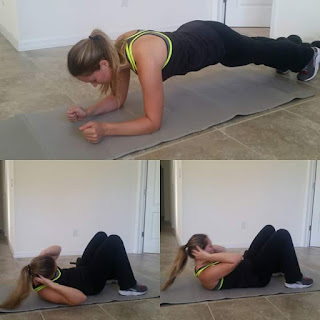
Extended starting position with lumbar glued to the ground. The legs can be bent over the chest, resting on a bench or on the ground with a 90 degree angle at the knee. Bring a shoulder in front of the opposite knee, then slowly return to the starting position. The elbow will touch the knee if your legs are bent over your chest.
Breathing

Inspiration at the beginning of movement when the rib cage is open. Blow by executing the movement.

Safety instructions

Avoid placing your hands behind your head as you tend to use it as a counterweight to exercise. This can lead to cervical problems. The easiest way is to keep your hands on your temples or chest.

Exercises the abdominal muscle in a way Rotating Crunches

Exercises the abdominal muscle in a way Leg Reports


Leg Reports


Exercises the abdominal muscle in a way Leg Reports

Here is an excellent movement to strengthen your abdominal muscles and strengthen your bust. Reverse leg surveys can be performed everywhere. No need for complicated machines or weight machines, just a bar or a solid support to grab and it's done.

This weight training exercise will make you strong. But it must be admitted that it is quite difficult to achieve especially if you are a beginner. When I started spinning my legs, I could only do 4 or 5 reps. With training, I was able to climb up to 20 reps and my abdominals are hard as steel.

If it is often advised to complete the abdominal session with conventional legs, it is better to place the spiked leg record at the beginning of the session because it is rather full-bodied. You can do a few sets of crunch at body weight to prepare and warm up the abdominals, then then chain directly onto the exercise.

Start by doing 4 sets of 5 repetitions at body weight (4 * 5). If you validate the format, add one more repeat to the next session (4 * 6), and so on.

It is possible to weight the exercise using weights that are fixed on the feet or a ballast belt.

Targeted muscles

The reversed legs at the helm work the great right of the abdominals and the obliques. The muscles of the back, the triceps and the forearms (taking of bar) are also put to contribution. In fact, the first part of the movement resembles a pull-over; we also find the sensations of a pulling arms outstretched for the back.

Execution of the exercise

Starting position arms stretched, suspended at the bar, and the body motionless. Climb the legs by bending the hips and knees, while bringing the feet to the level of the bar. Return to the starting position, braking the descent. The more slowly the exercise is done, both in the positive and negative phases of the movement, the greater the difficulty.
Breathing

Exhale in effort by climbing the legs, and inhale back to the starting position.

Safety instructions

Keep your arms straight and do not bend your elbows.

Choose a solid and stable support. A traction bar fixed between the stumps of a door or between two walls will not be suitable; this is not reliable. For simple legs, this can happen. But with the upside down legs, head down and feet in the air, it's way too risky. One can finish tetraplegic with a simple fall on the cervical ...

Share the article!

1


Exercises the abdominal muscle in a way Leg Reports

Exercises the abdominal muscle in a way Knee Reports

Knee Reports


 Knee Reports

This abdominal muscle exercise is often performed on a Roman chair, a device found in most weight-training rooms. It strengthens and muscles the waist, the abdominals but also the flexors of the hip.

Targeted muscles

He asks for the great right of the abdominals in static, the right anterior and the psoas iliac.

The large right is part of the abdominal strap with the obliques and the transverse. The action of the great right is the bending of the trunk.

Execution of the exercise

Hanging on a bar, on a espalier or called on a Roman chair, climb the knees as high as possible by contracting the right of the abdominals. Slowly lower backwards without arching the lower back until the thighs are parallel to the ground. The amplitude does not need to be large, so try to wind up abdominals.
Supended at a bar, you can harden this exercise by finishing the movement by a pelvic coil up to touching the bar with your feet. The final "ball" position makes it possible to stretch the entire upper part of the back and also the backs.

Breathing

The muscles being constantly contracted, having easy breathing is difficult. Exhale by contracting hard.

Safety instructions

This exercise is of little interest because the great law is worked in static. It is mainly the psoas-iliac and the anterior right - the flexors of the hip - that are worked. It is better to carry out crunches or pelvic surveys that wind the spine and demand the great right of the abdominals in dynamics.

Think about stretching because shortening due to lack of flexibility of the hip flexors is often responsible for lower back pain.

Share this articl

Exercises the abdominal muscle in a way Knee Reports

Exercises the abdominal muscle in a way Sit-up

Sit-up

Sit-up

This weight training exercise strengthens the waist and muscles the abdominals. He has a reputation for working the lower abdomen, where the crunch on the ground rather solicits the top of the abdominals.

Targeted muscles

He asks for the great right of the abdominals in static, the right anterior and the psoas iliac.

The large right is part of the abdominal strap with the obliques and the transverse. The action of the great right is the bending of the trunk.

Execution of the exercise

Sitting across the bench or on a floor mat, hands at the edge of the bench for balance, stretching the legs and bringing the knees back to the chest. Keep the abs under tension during movement.
Breathing

Inspiration by stretching your legs.

Safety instructions

Care must be taken to ensure that the feet never touch the ground. This exercise is of little interest because the great law is worked in static. it is especially the psoas-iliac and the anterior right which are solicited. It is better to make crunches or pelvic surveys that wind the spine and demand the great right of the abdominals in dynamics.

Share the article!

110

Exercises the abdominal muscle in a way Sit-up

Exercises the abdominal muscle in a way Pond surveys

Pond surveys


Exercises the abdominal muscle in a way Pond surveys

This weight training exercise works the abdominals and strengthens the waist. He has the reputation of soliciting the lower abdominals. Unlike other exercises, this one does not allow to add ballast, but it nevertheless is effective.

Targeted muscles

The basin survey on an inclined plane requires the great right of the abdominals.

The big straight, the "chocolate bar" is part of the abdominal strap with the obliques and the transverse and allows the bending of the trunk. The abdominal exercises where one raises the pelvis and the legs while keeping the bust fixed have the reputation of working more down the abdominals. Those like the crunches where the rib cage is wound with the immobile legs would do more work the top of the abdominals.

Execution of the exercise

Two slightly different variants are possible. It can be done on inclined bench and also on the ground. Lying on the bench, flexed legs, take off the buttocks by rolling the lower back and bring the knees towards the chest. Slowly return to starting position.
Breathing

Inspiration at the beginning of movement when the rib cage is open.

Safety instructions

Depending on the inclination of the bench, care must be taken that the feet never touch the ground. Always slow down the execution of the exercise, avoiding to arch the lumbar when the legs go down. For the benchless version, put a mat on the floor to avoid hurting your lower back.

Exercises the abdominal muscle in a way Pond surveys

Exercises the abdominal muscle in a way Ground Crunch

Ground Crunch


Exercises the abdominal muscle in a way Ground Crunch


Exercises the abdominal muscle in a way Ground Crunch

Crunch is a simple and effective exercise to muscle the abdominals. It refines and tightens the waist if you work with body weight, and develops the abdominals if you use an increasingly heavy ballast. It does not require any hardware and can be done anywhere.

Targeted muscles

The crunch mostly appeals to the great right of the abdominals, the famous "chocolate bar", and secondarily the oblique muscles located on the side of the waist. The great right allows the bending of the trunk; it brings the pubis closer to the sternum by a vertebral coil when the pelvis is fixed. It also allows the retroversion of the pelvis when the trunk is fixed.

The crunch has the reputation of more to apply the upper abdominals (above the navel) compared to the pelvis or legs, which would rather work the lower part.

Execution of the exercise

Starting position elongated on the ground or on a bench. The hands can be placed on the head at the temples, on the chest, or along the body (easier). Avoid positioning them behind the neck.

The feet can be placed on the floor, near the buttocks, or rest on a bench. It is also possible to place the thighs vertically, knees bent and spread, crossed feet, so as not to arch the lower back during the movement. Be careful, the more the legs are raised or even stretched, the more the difficulty increases.

Wrap the bust forward by contracting the abdominals. The shoulders only take off a few centimeters from the ground, and the lower back and hips remain fixed.


The return to the starting position must be carried out smoothly, retaining the contraction and tension in the muscle. The speed of execution is slow and constant. A weight can be placed on the chest like a cast iron washer or a dumbbell, to add difficulty to exercise. You can also stretch your arms backwards to increase resistance.

Breathing

Inspiration at the beginning of movement when the rib cage is open. Blow by performing the movement and tighten your abdominals. Respiratory blockage should be avoided.

Safety instructions

Avoid placing your hands behind your head, because often you help yourself to do the exercise when you block. This can lead to cervical problems. The easiest way is to keep your hands on your temples or chest.

Do not lift the lower back, the very small amplitude does not improve exercise efficiency.

Working with unblocked feet, tight and knees apart, limits the activity of the hip flexors, psoas-iliac and anterior straight, and avoids many tensions and pains in the lower back. If you have back pain when you do the abs exercises, this article should help you: Why do I have back pain when I do the abs?

Crunch Tips

As postural muscles, the abdominal muscles are rather enduring and can be worked in long series. We suggest series of 15 to 30 repetitions, but if you can do more, do not hesitate to harden the exercises. At the planning level, 3 complete sessions of abdominals per week will do the trick. But do not forget to work all the muscles that make up this group, not just those that are visible, on the surface! I think especially the transverse, do not zap the cladding!

We can do the abdominals at the end of the session, so that they remain fresh for the global exercises where they are used.

If you find the exercise too easy and you can chain more than 50 repetitions, do not hesitate to harden the exercise by adding resistance. To do this, you can move your hands away from your chest and reach out your arms behind your head. You can of course use weights, discs or dumbbells, to place on the chest or behind the neck. This is especially true if you want to gain weight at the waist (thin people).


We remind you that to get dry and drawn abdominals, doing exercises will not be enough. The exercises allow to strengthen the abdominal muscles and help to reduce the waist circumference, in particular by the practice of the cladding. But only the diet will rid you of the layer of fat that covers them. To do this, review your nutrition and regularly carry out an aerobic activity (cardio-training) in addition to bodybuilding.

Exercises the abdominal muscle in a way Ground Crunch

Featured post

Intermittent Fasting for Beginners: The Complete 2026 Guide to Lose Fat and Build Muscle

Last Updated: September 2026 | Reading Time: 12 minutes | Expert Reviewed Quick Answer: Intermittent fasting (IF) is an e...

Search This Blog

Ad Home

Breaking

Random Posts

Recent Posts

Contributors

Followers

Recent News

About Me

We share practical, easy-to-follow fitness and nutrition guides to help you train smarter, eat better, and reach your goals — one workout at a time.

Comment

Popular Posts