HOME

    Social Items

Showing posts with label Bodybuilding Tips. Show all posts

Last Updated: September 2026 | Reading Time: 12 minutes | Expert Reviewed

Quick Answer: Intermittent fasting (IF) is an eating pattern that cycles between periods of fasting and eating. The most popular method is 16/8 (16 hours fasting, 8 hours eating), which can help you lose weight and preserve muscle mass when paired with a balanced diet.

If you've been struggling with stubborn belly fat, low energy, or confusing diet advice, you're not alone. Intermittent fasting has grown into one of the most widely discussed eating strategies worldwide, and a major review published in the New England Journal of Medicine outlined a wide range of potential health benefits backed by decades of animal and human research.

But here's the problem: most "guides" online are either too simplistic or filled with outdated or exaggerated claims. This article is different. We've combined peer-reviewed research and real-world practicality to give you an honest, actionable guide — including where the science is strong, and where it's still debated.

Complete guide to intermittent fasting for beginners - lose fat and build muscle with 16/8 method

What Is Intermittent Fasting? (The Science Explained Simply)

Intermittent fasting isn't a diet—it's an eating pattern. Instead of focusing on what you eat, IF focuses on when you eat.

Here's what happens in your body during a fast:

  • 0-4 hours: Your body digests and absorbs nutrients from your last meal.
  • 4-12 hours: Blood sugar and insulin levels begin to drop.
  • 12-18 hours: Your body increasingly shifts toward burning stored fat for energy.
  • 18-24 hours: Autophagy activity increases—your cells begin a "cleanup" process.
  • 24+ hours: Human growth hormone (HGH) levels can rise substantially in some studies.
💡 Key Fact: Multiple clinical studies link intermittent fasting to improved insulin sensitivity, though the size of the benefit varies by individual, fasting method, and how it's combined with diet quality.

The 5 Most Popular Intermittent Fasting Methods (Ranked by Difficulty)

1. The 16/8 Method (Leangains Protocol) - BEST FOR BEGINNERS

How it works: Fast for 16 hours, eat during an 8-hour window (e.g., 12 PM - 8 PM)
Best for: Beginners, muscle building, sustainable weight loss
Difficulty: ⭐ (Easy to moderate)

2. The 5:2 Diet (Modified Fasting)

How it works: Eat normally 5 days, restrict to 500-600 calories on 2 non-consecutive days.
Best for: People who prefer flexibility.
Difficulty: ⭐⭐⭐ (Moderate)

3. Eat-Stop-Eat (24-Hour Fast)

How it works: Fast for a full 24 hours once or twice per week.
Best for: Advanced practitioners.
Difficulty: ⭐⭐⭐⭐ (Challenging)

4. Alternate-Day Fasting

How it works: Alternate between fasting days and eating days.
Best for: Significant weight loss goals, under guidance.
Difficulty: ⭐⭐⭐⭐⭐ (Very challenging)

5. OMAD (One Meal A Day)

How it works: Eat all your calories in a single 1-hour window.
Best for: Advanced users only.
Difficulty: ⭐⭐⭐⭐⭐ (Very challenging)

📊 Intermittent Fasting Methods Comparison Table

Method Fasting Window Eating Window Best For Difficulty
16/8 16 hours 8 hours Beginners Easy
5:2 2 days/week 5 days normal Flexibility Moderate
Eat-Stop-Eat 24 hours Normal eating Advanced Hard
OMAD 23 hours 1 hour Experts Very Hard

How to Start Intermittent Fasting: A Step-by-Step Guide

Step 1: Choose Your Method (Start with 16/8)

If you're new to fasting, the 16/8 method is your best starting point. It's sustainable, flexible, and fits easily into most lifestyles.

Step 2: Pick Your Eating Window

  • 12 PM - 8 PM: Most popular (skip breakfast, eat lunch and dinner).
  • 10 AM - 6 PM: Early eater (eat breakfast and lunch, skip dinner).
  • 2 PM - 10 PM: Night owl (late lunch and dinner).

Step 3: Stay Hydrated During Your Fast

  • ✅ Water (plain or sparkling)
  • ✅ Black coffee (no sugar, no milk)
  • ✅ Green tea or herbal tea (unsweetened)
  • ❌ NO calories (this breaks your fast)

Step 4: Break Your Fast Gently

Don't binge when your eating window opens. Start with:

  • A small protein-rich meal (eggs, chicken, Greek yogurt).
  • Healthy fats (avocado, nuts, olive oil).
  • Complex carbs (brown rice, sweet potatoes, quinoa).
🎯 Want to know your exact daily calorie needs for this plan?

Intermittent Fasting Meal Plan: What to Eat (and Avoid)

✅ Foods to Eat During Your Eating Window

  • High-Quality Proteins: Chicken breast, turkey, lean beef, fish, eggs, Greek yogurt, tofu.
  • Healthy Fats: Avocados, olive oil, coconut oil, nuts (almonds, walnuts), seeds (chia, flax).
  • Complex Carbohydrates: Brown rice, quinoa, oats, sweet potatoes, whole grain bread, legumes.
  • Fruits and Vegetables: Leafy greens, broccoli, berries, apples, citrus.

❌ Foods to Avoid

  • Sugary drinks (soda, fruit juice, energy drinks).
  • Processed foods (chips, cookies, candy).
  • Refined carbs (white bread, pastries).
  • Fried foods and excessive alcohol.

Intermittent Fasting Benefits: What Science Actually Says

  • Weight Loss: Multiple studies link intermittent fasting to meaningful weight loss over several weeks, with a notable share coming from visceral (belly) fat — especially when combined with a modest calorie deficit.
  • Insulin Sensitivity: Several trials report improved insulin sensitivity with fasting, which may help lower long-term diabetes risk, though results vary between studies.
  • Heart Health: Some research links fasting to improvements in blood pressure, cholesterol, and inflammatory markers.
  • Cellular Repair (Autophagy): Fasting periods appear to activate autophagy, a cellular "cleanup" process studied for its potential role in healthy aging.
⚖️ A Balanced Look at the Evidence: A large 2025 review of 99 clinical trials published in The BMJ found that daily time-restricted eating (like 16/8) did not clearly outperform simply maintaining a consistent calorie deficit. In other words, 16/8 isn't magic — its real advantage for many people is that the schedule is easier to stick to than traditional calorie counting, which matters a lot for long-term success.

⚠️ Side Effects and How to Avoid Them

  • Hunger and cravings: Normal during the first 1-2 weeks. Drink water or black coffee.
  • Headaches: Often caused by dehydration. Add a pinch of salt to your water.
  • Fatigue: Ensure you're eating enough calories during your eating window.
  • Digestive issues: Increase fiber and water intake.

Note: Consult your doctor before starting if you are pregnant, have a history of eating disorders, are underweight, or have type 1 diabetes.

Frequently Asked Questions (FAQ)

How long does it take to see results?

Most people notice initial changes (reduced bloating, increased energy) within 1-2 weeks. Visible fat loss typically appears after 3-4 weeks. Significant body composition changes take 8-12 weeks.

Can I drink coffee during my fast?

Yes! Black coffee (without sugar, milk, or cream) is perfectly fine. It can suppress appetite and boost metabolism. Limit to 3-4 cups per day.

Will intermittent fasting cause muscle loss?

Research generally suggests IF can preserve muscle mass reasonably well compared to traditional calorie restriction, especially when combined with resistance training and adequate protein intake (0.8-1g per pound of body weight).

Is intermittent fasting safe for women?

Generally yes, but women may need to start more gradually (14/10 instead of 16/8) due to hormonal differences. Listen to your body and adjust accordingly.

The Bottom Line: Should You Try It?

Intermittent fasting is a practical, well-studied strategy that can help many people manage their weight and build better eating habits. It's not a magic bullet — the latest large-scale evidence suggests it works mainly by making calorie control easier to stick to, not through some unique metabolic advantage — but for people who struggle with traditional dieting, that alone can be a game-changer.

Our recommendation: Start with the 16/8 method, be consistent for at least 4 weeks, use our free calorie calculator above, and combine IF with resistance training for the best body composition results.

Intermittent Fasting for Beginners: The Complete 2026 Guide to Lose Fat and Build Muscle

Gironda Dips: The Complete Guide to Vince Gironda's Chest-Sculpting Technique

Last Updated: September 2026 | Reading Time: 8 minutes

Quick Answer: Gironda dips are a wide-grip, forward-leaning dip variation created by legendary bodybuilding coach Vince Gironda specifically to build a classic, wide chest shape — rather than the "unsightly" round look he felt standard dips produced. The key differences from a normal dip: a wider bar spacing, a deeply rounded back, and chin tucked to chest throughout the movement.

Gironda dips starting position - wide grip chest dip variation demonstration

Who Was Vince Gironda, and Why Did He Invent This Exercise?

Vince Gironda was one of bodybuilding's most influential — and unconventional — coaches. He believed the standard flat-and-wide bench press built a chest shape he considered unappealing: round and "shield-like," similar to a gladiator's breastplate. To build the sculpted, separated pec shape he wanted for his clients, he developed a specific dip technique now known simply as the Gironda dip.

💡 Key Fact: The exercise works primarily through a very wide bar grip combined with a deliberately rounded upper back — a very different setup from a standard triceps-focused dip.

Gironda Dips: Exercise Properties

Property Detail
Main Muscle Chest
Secondary Muscles Triceps, Shoulders
Equipment Wide parallel dip bars (bodyweight)
Exercise Type Compound, Push
Difficulty Intermediate to Advanced
Gironda dips wide bar hand positioning close-up

How to Perform Gironda Dips: Step-by-Step

Step 1: Set Your Grip

Use wide parallel bars set to roughly 33 inches apart — noticeably wider than a standard dip station. Grip firmly with arms nearly locked out, supporting your full bodyweight above the bars.

Step 2: Set Your Body Position

This is the detail most people get wrong. Elbows point wide and straight out to the sides — never tucked back. Head drops down with chin tucked to chest, and the upper back rounds forward. Feet stay under your face or slightly in front of it.

Step 3: Lower With Control

Dip down as far as your shoulder mobility comfortably allows, keeping the rounded, chin-down position throughout.

Step 4: Press Back Up

Return to the top, keeping elbows wide the entire time. Never let your elbows drift backward — this shifts tension away from the chest and onto the triceps, defeating the purpose of the exercise.

3 Gironda Dip Variations

Gironda dips low position pec isolation variation

1. Wide Parallel Dips

The classic version described above. Wide grip, round upper back, chin on chest, elbows straight out to the sides, feet together and pointed down under your face. Produces a sharp line of separation under the pecs that's hard to achieve with other exercises.

2. Low-Position Partial Dips

Performed on a slightly narrower (32-inch) parallel bar in a crescent body position — head down, back rounded, chest concave, elbows at right angles. Gironda considered the bottom portion of the movement (the first 12 inches from a hanging position) the most valuable part for pec isolation. If you can't complete a full rep yet, this partial range alone is enough. Try 3 sets of 12 reps.

3. V-Bar Half Dips

Using a 32-inch grip facing the V-end of dip bars, with back rounded and toes pointed to the floor, press from the low position up to where your upper arms are horizontal to the floor, then return. Add a weight belt for extra resistance once bodyweight becomes easy.

Gironda dips V-bar variation with weight belt

Chest vs. Triceps: How Emphasis Changes

Dips can shift between a chest exercise and a triceps exercise based on body angle. The more you lean forward and round the back (the Gironda style), the more the chest takes over. The more upright and elbows-tucked your position, the more triceps get involved.

Tips & Safety

No spotter needed, but helpful: If you don't have the strength yet, ask a training partner to support your legs, or use an assisted-dip machine.
Progressive overload: Once bodyweight dips feel easy, add a weight belt to keep progressing.
Shoulder health first: If you feel pinching or sharp pain in the front of the shoulder, reduce your range of motion or skip this variation.

Frequently Asked Questions (FAQ)

What makes Gironda dips different from regular dips?

A wider bar grip (around 33 inches), a deliberately rounded upper back, and chin tucked to chest throughout — designed specifically to isolate the chest rather than the triceps.

Are Gironda dips safe for beginners?

They're better suited to lifters with some dip experience and healthy shoulder mobility. Beginners should master standard dips first, then progress to the wider Gironda grip.

Do Gironda dips work the triceps at all?

They're a secondary mover here rather than the focus. Keeping elbows wide (not tucked back) is what keeps the emphasis on the chest instead of the triceps.

How many sets and reps should I do?

For the partial low-position variation, Gironda recommended 3 sets of 12 reps. For full-range wide dips, 3-4 sets of 8-12 reps works well for most lifters.

Related Articles

See more ...

Gironda Dips: The Complete Guide to Vince Gironda's Chest-Sculpting Technique

How to Do a Pull-Up: The Complete 2026 Technique Guide (From Zero to Your First Rep)

Last Updated: September 2026 | Reading Time: 9 minutes

How to do a pull-up - complete technique guide

Quick Answer: A pull-up is a compound bodyweight exercise where you hang from a bar with an overhand grip and pull your chin above it. It builds your back, biceps, shoulders, and core all at once. Most beginners need 4-8 weeks of targeted practice to get their first strict rep — this guide shows you exactly how.

Why the Pull-Up Is One of the Best Exercises You Can Do

The pull-up is a true test of relative strength — how much of your own bodyweight you can move. Unlike machines that isolate one muscle, a pull-up recruits your lats, biceps, rear delts, forearms, and core in a single coordinated movement. It needs zero equipment beyond a bar, which makes it one of the most accessible exercises in existence.

💡 Key Fact: Only around 1 in 5 adults can perform a single strict pull-up on their first attempt without training. If you can't do one yet, you're in good company — and this is completely fixable with the right progression.

Muscles Worked During a Pull-Up

Muscle Group Role
Latissimus Dorsi Primary mover — pulls your body upward
Biceps & Forearms Elbow flexion and grip endurance
Rear Deltoids Shoulder stabilization
Core (abs + obliques) Prevents your legs from swinging

Perfect Pull-Up Technique: Step-by-Step

Step 1: The Dead Hang

Grip the bar slightly wider than shoulder-width, palms facing away from you. Hang with fully extended arms and relaxed shoulders. This is your starting and ending position for every rep.

Step 2: Engage Your Shoulder Blades

Before pulling, pull your shoulder blades down and back ("packing" the shoulders). This protects your shoulder joint and creates a stronger base of pull.

Step 3: Pull With Your Elbows, Not Your Hands

Drive your elbows down toward your hips rather than thinking about pulling with your hands. This cue automatically activates your lats instead of over-relying on your biceps.

Step 4: Chin Over the Bar

Continue pulling until your chin clears the bar. Avoid jerking your head forward to "cheat" the range of motion — keep your torso upright throughout.

Step 5: Controlled Descent

Lower yourself slowly to a full dead hang. The eccentric (lowering) portion is where a large part of your strength gains actually happen — don't just drop.

Can't Do a Pull-Up Yet? Follow This Progression

Level Exercise Goal Before Progressing
1 Dead hang Hold 30-45 seconds
2 Negative pull-ups (jump to top, lower slowly) 5 reps of 5-second descent
3 Band-assisted pull-ups 3 sets of 8 reps with light band
4 Inverted rows 3 sets of 12 reps
5 Strict pull-up attempts 1 clean rep

5 Common Pull-Up Mistakes (and How to Fix Them)

Swinging or kipping: Using momentum instead of strength. Fix: slow down and control the dead hang before each rep.
Partial range of motion: Not reaching a full hang or full chin-over-bar. Fix: film yourself from the side to check your range.
Shrugging shoulders up to your ears: Loses tension and risks injury. Fix: "pack" your shoulders down before pulling.
Training pull-ups every day: Your back needs recovery time. Fix: train pull-ups 2-3 times per week, not daily.
Ignoring grip strength: Weak forearms fail before your back does. Fix: add dead hangs and farmer's carries to your routine.

Pull-Up Variations to Keep Progressing

Wide-grip pull-up: Places more emphasis on the outer lats
Chin-up (underhand grip): Shifts more work to the biceps — often easier for beginners
Neutral-grip pull-up: Easier on the shoulders and wrists
Weighted pull-up: Add a dip belt once you can do 8-10 clean bodyweight reps
Archer pull-up: An advanced unilateral variation that builds serious strength on one side at a time

Sample Weekly Pull-Up Training Plan

Day Focus
Monday 3 sets to near-failure (or progression exercise from the table above)
Wednesday Grip work + dead hangs + light volume
Friday 3 sets to near-failure, aim to beat last Monday's reps

Frequently Asked Questions (FAQ)

How long does it take to do your first pull-up?

Most complete beginners following a structured progression (like the table above) get their first strict rep within 4-8 weeks of consistent training, 2-3 sessions per week.

Are chin-ups or pull-ups better for beginners?

Chin-ups (underhand grip) recruit more biceps and are usually slightly easier, making them a good entry point if a strict pull-up feels out of reach.

How many pull-ups should a beginner be able to do?

One clean rep is a solid milestone. Reaching 5-8 clean reps is considered a good beginner-to-intermediate benchmark.

Can I do pull-ups every day?

It's better to train 2-3 times per week with rest days between sessions, since your back and biceps need recovery time to grow stronger.

Do pull-ups build a bigger back?

Yes — pull-ups are one of the most effective exercises for building lat width, which contributes directly to the "V-taper" look many lifters aim for.

Related Articles

How to Do a Pull-Up (The Complete 2026 Technique Guide)


Weight training is great for making the bones stronger.
A car ran over my foot 3 weeks ago and broke one of the bones in it which you need to walk properly.
Its got better so fast! 3 weeks on, im walking without any crutches or sticks comfortably! Just waiting to get the plaster off next week, even though I feel ready now.

I think this is very much due to lifting weights. The day before the accident i trained legs doing 506lbs for 15 on leg press. While thats not a lot for most, im only 154lbs and all the pressure on the feet I think Has definately helped make them stronger considering the rate of recovery ive had.

In fact in other times of illness, my body had canbalised itself getting better and I have found ive lost lots of muscle in the past when ill. But then on the flip side, I get better quick.
I think building the body up, means in time of illness your body has more resources to use in getting better. The health benefits of training are many,
Read more ...


Broken bones and bodybuilding

The most beautiful motivational phrases 


The most beautiful motivational phrases and the words of psychological stimulation of the most important factors needed by the bodybuilder to regularize in this sport, the psychological factor plays an important role in the activity and enthusiasm and effectiveness of the player during his career in bodybuilding

Here in this topic I would like to introduce to you some of the beautiful motivational phrases that heroic bodybuilders have said in their career in bodybuilding.

And frankly beautiful phrases from them are working to motivate you and continue to practice bodybuilding

1 / Which way was slow is still better than stretched on the sofa

2 / It seems difficult to you now will soon be part of the protection

3 / Summer bodies .. Made in the dark

4) Temporary pain is a temporary pain

5 / When you feel you want to stop and surrender Remember how many people you have to prove to them that they made a mistake

6 / Building your muscles is not to be better than anyone else but to be better than you are

7 / Do today what others will not do tomorrow that others can not do

8 / will attack you once and two and ten shawls surrender and attacked him strongly to achieve success in building your body

9 / A year from now you will be glad you started from the day

10 / I will not tell you that the road will be easy but the results will make you feel happy

11 / If you can imagine a picture then you can make it a reality on your body

12 / acted as it is impossible to fail

13 / The ideal for excellence is what motivates you

14 / Training is the best teacher


The most beautiful motivational phrases

The most beautiful motivational phrases

 The most important dietary supplements needed by bodybuilding athletes


 The most important dietary supplements needed by bodybuilding athletes


The most important dietary supplements needed by bodybuilding athletes

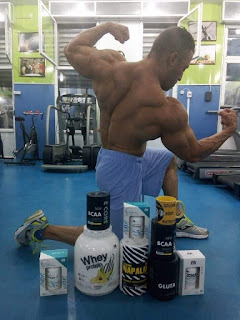
Among the most important supplements needed by the athlete Kamal Lahams in Ramadan for Muslims and is as follows:

✔ Amino acids: It is one of the foundations in the composition of protein in the body, and divided into two basic and non-essential, and its main functions are the formation and repair of tissues as well as cells, and the formation of the main objects resistant to bacteria and viruses, and makes the human body non-major types of these acids, They are brought to the body by food and food. These are the most important amino acids - aspirin - glutamine - cysteine ​​- arginine - lucine - isolucin - valine

Proteins: Protein is one of the most important substances in the formation of living cells of humans, which are complex substances, and usually there are dietary supplements of proteins and provide for athletes who do not fill the need for proteins in the normal food and the most famous types of dietary supplements made of protein:
 🚩Kazine: This type of cheese is extracted, preferably in the period of sleep and the need for the body to a long time to absorb. It lasts for 8 hours such as: Kazin Platinum

🚩 Alway protein: This protein is extracted from milk straw or serum, and is considered one of the most useful types for easy absorption of the body. Such as Wai Kold of FA purest kind of protein

✔ We also need to complete ZAM:
Supplemented with vitamins, magnesium and zinc.

✔Complete omega 3:

It is found in fatty fish such as salmon, tuna and sardines. It is a great way to burn fat, build muscle and many other benefits.

Omega 3 has shown many health benefits in the nutrition world, helping to provide many vital health benefits to the body. Omega-3 is composed of 3 types of fat called alpha-linolenic acid, oxosapentenoic acid, and docosahexenoyic acid. Omega-3 is one of the essential fatty acids that can not be produced by the body in sufficient quantities. Therefore, it must be obtained through dietary supplements such as Or from food.


The most important dietary supplements needed by bodybuilding athletes

The most important bodybuilder needs to do a successful training program to develop the muscle


The most important bodybuilder needs to do a successful training program to develop the muscle


The most important bodybuilder needs to do a successful training program to develop the muscle
We find many people in the field of muscle building and fatness are always looking for a special training program, you find them searching a lot in the Internet and ask many of the coaches are confused and become a sportsman at a loss of what works for him and every time change his training program until he is tired
I found this topic very important to address him and explain the most important thing to focus on the training program and what are the fundamentals and we will deny them in points and you are free to question about each element was denied
1: What should be chosen as a compound exercise or isolation
2: What do I do first in the training schedule?
3: How much weight do I use?
How many groups do I have to do
5: How long to rest between rounds and exercises
6: When to incorporate training techniques and time
7: The speed of the repetition How to be the speed on which to raise the weight
8: Focus and get it.
#soheib


The most important bodybuilder needs to do a successful training program to develop the muscle

Why the drying stage is the most difficult stage. What rules do I apply at this stage and what diet should I eat?


Why the drying stage is the most difficult stage. What rules do I apply at this stage and what diet should I eat?

Why the drying stage is the most difficult stage. What rules do I apply at this stage and what diet should I eat?


What rules do I apply to the drying phase when the contest time approaches?

This answer is directed to every young man who has no idea of ​​the stage of drying

You want to bend the muscles after a big time of drying

1 - Keep away from eating to have saturated fat

Reduce carbohydrates

3 - divide your meals in the day to 5 times

4. You should eat at least 2 grams of protein per kilo of your body

5. Drink plenty of water and say water and water

6. Cardio should exercise 4-5 times a week

7. You should keep your breakfast because it is essential

8. Eat a protein-rich meal at night

9 - You should keep away from sugars, salts, lowers and carbohydrates, especially white bread

With the conciliation of your young brothers soheib

A word thank you means a lot to me

#soheib

Why the drying stage is the most difficult stage. What rules do I apply at this stage and what diet should I eat?

Featured post

Intermittent Fasting for Beginners: The Complete 2026 Guide to Lose Fat and Build Muscle

Last Updated: September 2026 | Reading Time: 12 minutes | Expert Reviewed Quick Answer: Intermittent fasting (IF) is an e...

Search This Blog

Ad Home

Breaking

Random Posts

Recent Posts

Contributors

Followers

Recent News

About Me

We share practical, easy-to-follow fitness and nutrition guides to help you train smarter, eat better, and reach your goals — one workout at a time.

Comment

Popular Posts